Yolanda Ackles
Straight ManYolanda Ackles is a student at West Central Pennsylvania University whose effort to live and study outside psychiatric care becomes entangled with the dangers of stopping medication and with her fixation on her former professor, Tony Coniglia. Her story moves between the practical routines of a student, the vivid relief she associates with being unmedicated, and episodes that bring her back into institutional and public attention. It also arrives through a revealingly limited channel: William Henry Devereaux, Jr. acknowledges that he invents an omniscient account of Yolanda’s inner experience while listening to Tony describe events. Her life is therefore presented both as a set of consequential reported incidents and as an imaginative reconstruction whose limits the novel makes explicit.
Background and University Life
Yolanda had lived for a long time at Hereford Clinic before a decision was made to move her into the community. After settling into an apartment at Railton Towers, she enrolled in campus classes at the encouragement of her counselor, who assured her that the state would cover the cost. The counselor also warned her to keep taking her medication, referring to the consequences of skipping it. The move gave Yolanda access to ordinary student routines, but it did not remove the continuing importance of treatment and support.
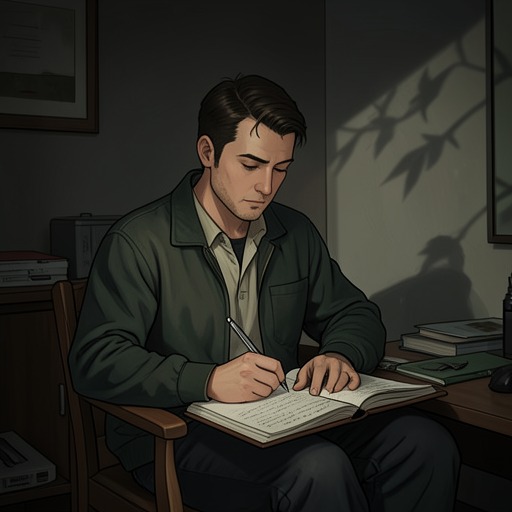
Medication made information feel indistinct to her, yet it also helped her participate among other people without being singled out as someone with special problems. In class she generally sat at the back or to one side, took copious notes, and watched her professors for signs of kindness. That attention could matter more to her than the subject being taught. She did not enroll in classes taught by women professors. The account presents these choices as part of her particular way of navigating campus, without explaining them through a motive the evidence does not establish.
Yolanda struggled to sort important information from incidental detail, sometimes misheard, lost track of a subject, or misunderstood irony. Even with those difficulties, she earned mostly C grades and occasional Bs. Her performance placed her alongside classmates who were hungover, disengaged, or using drugs: medication allowed her to compete in a demanding but unremarkable academic environment. The grades do not erase her difficulties; they show that she could maintain a degree of participation while managing them.
Medication and the Imagined Sailing Metaphor
The account gives particular weight to Yolanda’s memory of skipping medication. Its effects, as she experiences them, are not simply a return of difficulty but a powerful change in how the world feels. On medication, she imagines herself becalmed while other people move freely around her. Without it, she feels newly able to join in their movement and pleasure. The relief is real within this account, even as she knows that remaining off medication for too long can lead to a crisis and a return to Hereford Clinic.
That sailing image has an important narrative qualification. William Henry Devereaux, Jr. says that he composes it in his head while Tony talks over coffee; the omniscient telling and the metaphor are his invention, not a quotation from Yolanda or a scene presented as her direct testimony. His imagined movement from flat calm to exhilarating wind gives form to the appeal of stopping medication, while also showing that the reader encounters Yolanda’s inner life through the narrator’s act of composition. He presents the exhilaration and the danger together: the feeling of joining others gives way, if it lasts too long, to a risk of being driven back to clinical care. Medication, in turn, means a return to calm that she experiences as painful isolation.
Fixation on Tony Coniglia and Campus Incidents
Yolanda’s most visible crisis concerns Tony Coniglia, her former professor. In conversation with William Henry Devereaux, Jr., Tony says that she is obsessed with him, hears his voice coming from the walls at night, believes he is God, and thinks she is carrying God’s child. She also claims that they had a sexual relationship. Tony’s account makes the claims plain but does not establish them as true; the narration itself points to her reported experiences of hearing his voice as a reason for caution about her testimony.
Tony says that the episode under discussion is the third incident involving Yolanda that term. On two earlier occasions, she had been forcibly removed from campus. Usually, staff contacted her therapist, helped get her back on medication, and allowed her to return. A further obstacle was that readmission to Hereford depended on a place becoming available. The pattern places Yolanda between campus responses to immediate disruption and a treatment system whose capacity could not be assumed.
The incident also becomes a matter of university scrutiny and news coverage. Tony tells William Henry Devereaux, Jr. that the Sexual Harassment–Professional Conduct Committee, chaired by June Barnes, is investigating, and that the allegations may reach the newspaper. When the account later appears in the campus paper, it reports Yolanda’s claims about Tony and notes her history of mental illness. June Barnes confirms that the matter is under investigation. Asked whether Tony is a professor who regards undergraduate women as potential sexual partners, she declines to comment. The reporting places an individual crisis inside a larger institutional question about faculty conduct, while neither the investigation nor the article resolves what occurred between Yolanda and Tony.
Tony also tells William Henry Devereaux, Jr. that Yolanda appeared at his house while he and members of the local press were there, and began taking off her clothes as if preparing to join them in the bath. The unexpected intrusion startled the press. The episode extends the disruption beyond the university grounds and underscores why Tony expects the story to attract public attention. It does not, by itself, settle the truth of her claims about their relationship.
Attempted Suicide and Tony’s Uncertainty
In May, Yolanda attempted suicide by stepping in front of a car near the bottom of the steep hill leading to Tony’s house. The driver saw her in time to brake, though the car struck her and she was thrown through the intersection. Witnesses described her as surviving an accident that might have killed her; she briefly sat up before losing consciousness. At the hospital, she was found to have sustained serious injuries, none of them life-threatening. The account establishes her survival but gives no later resolution of her recovery or circumstances.
Later that same morning, Tony was admitted to the same hospital because of heart fibrillations. His cardiac history led doctors to keep him overnight for observation. He returned home the following afternoon with a mild tranquilizer and instructions not to play racquetball with William Henry Devereaux, Jr. for the rest of the summer. The parallel hospital admissions connect Yolanda’s crisis to Tony’s own vulnerability, but they do not establish that her attempt was caused by him or by any single event.
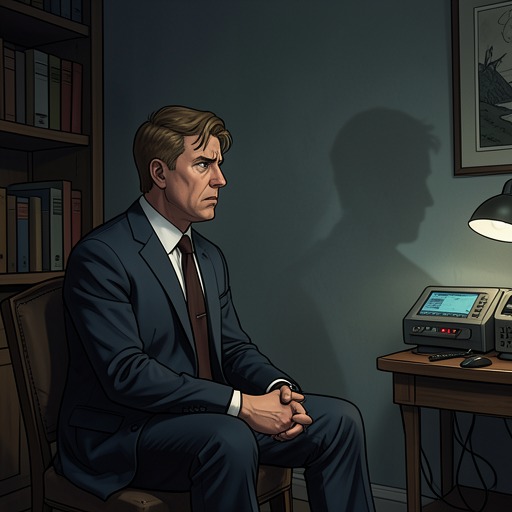
When William Henry Devereaux, Jr. and others visit Tony afterward, Tony wonders aloud whether he flirted with Yolanda. He says he cannot remember doing so, though he recognizes himself as flirtatious and recalls having flirted with William Henry Devereaux, Jr.’s wife. William Henry Devereaux, Jr. replies that, if Tony did flirt with Yolanda, he believes Tony meant to make her feel better about herself. Tony does not simply accept that reassurance; he asks whether his behavior might instead have been about making himself feel good. The exchange leaves the possible flirtation and its meaning uncertain, while showing Tony confronting a responsibility he cannot confidently measure.
Narrative Role and Unresolved Significance
Yolanda’s story is shaped by two forms of mediation. Tony reports her words and actions to William Henry Devereaux, Jr.; the newspaper reframes the allegations as a campus controversy; and William Henry Devereaux, Jr. openly supplies an imagined account of her private experience. That disclosure makes the passage’s compassion inseparable from self-conscious narration. The sailing metaphor invites attention to the emotional cost of medication, but the narrator’s admission that he invented it prevents it from being mistaken for Yolanda’s own language.
The novel does not provide a final account of Yolanda’s condition, her treatment after the suicide attempt, or the outcome of the investigation into Tony. Instead, it ends this strand with an unresolved question about interpersonal responsibility: Tony suspects he may have encouraged her attachment, while the narrator offers a kinder interpretation that Tony himself doubts. Yolanda is neither reduced to the allegations nor given a definitive explanation from outside. Her presence exposes the distance between institutional labels, public reporting, another person’s recollections, and the inaccessible fullness of her own experience.